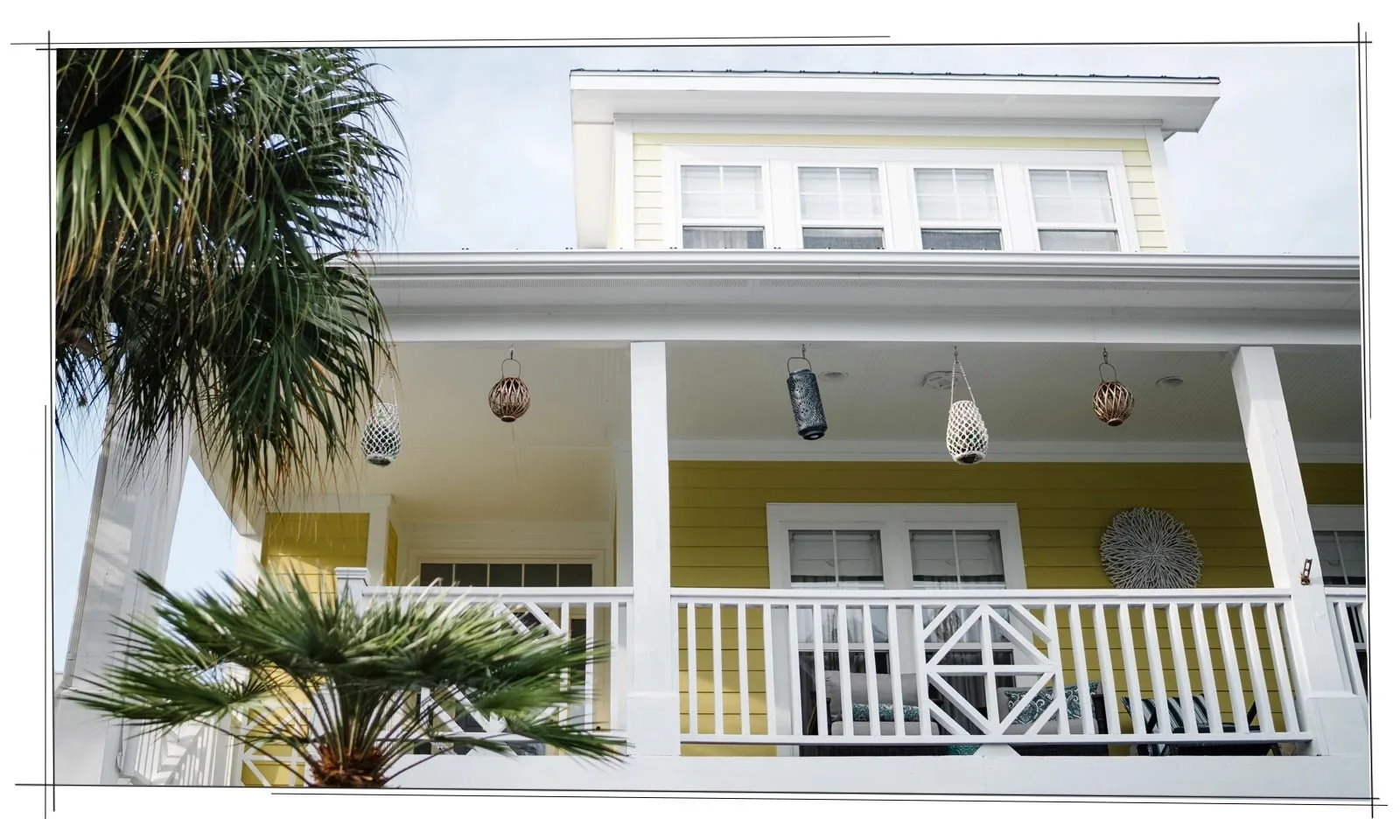
Every window was open the first time I walked through. The air was salty and fresh, and the floors gleamed honey gold. It was spring in a North Carolina beach town and the place felt like it had been waiting for me. In my mind I had priced the house before I even made it past the entryway.
I’ve spent my career putting a price on things. Companies, deals, the cost buried in the fine print where no one thinks to look. So, when I walked through this little beach house and the woman selling it mentioned she wanted to start a new life somewhere else, I did what I do best. I negotiated.
Seven thousand dollars for all the furniture in the house was my offer. She countered at thirty thousand, which was surely a discount on what it had cost her, and I understood that. She was letting go of a whole life, and I was paying for furniture. But I also knew that most of the furniture would be at the donation center the day my own furniture arrived, so I held firm. In the end she took my offer but she wasn’t happy about it. She had planned to drive across the country in her new RV and that’s where her planning stopped.
A motivated seller without a plan is how a deal like that gets made.
I needed the house ready to go, not ready later. My company had just acquired another company nearby, which would put me in North Carolina half of the time, and in the middle of the pandemic frenzy nothing could be delivered. An April sofa order would arrive nine months later, if at all. That seven thousand dollars bought two things I couldn’t get any other way, that year at least.
A house I could live in the day I got the keys. And, buried in a great deal of junk, a handful of pieces that were well made: a primary bedroom set, the dining furniture, solid and heavy and better than anything I could have ordered in a hurry. Those alone would have cost more than I paid for everything. I kept them, worked them into the design, and donated the rest as my new pieces arrived.
One urgent cost caught me off guard.
I had always planned to paint. I hadn’t planned to refinish every floor in the house the month I moved in. During the showings we smelled nothing, but the morning the keys were mine, all I could smell was years of cat and dog soaked into the subfloor.
Whatever magic they had performed for the open house, the right air freshener combined with the windows thrown wide, had held the smell down just long enough for a clean pass. I still would have bought the house. Next time, I’d ask the seller in writing if pets lived there.
I’d go back a second time on a hot day with the windows shut, because heat brings out what fresh air hides.
Then I’d get a quote to refinish the floors before closing so they could be part of the conversation instead of a surprise afterward.
What a House Is For
For most of my life I saw a house the way I saw any deal: a good investment or a bad one. So, I ran this one like a deal. We handled the inspection, won the negotiation, and walked away with a house full of furniture. Then my family spent a weekend in it, and I understood that I had been pricing the wrong thing.
For my son's second birthday the extended family came, eight of us, siblings and their families and a two-year-old in a paper crown. We cooked shoulder to shoulder through counters buried in dishes and ingredients, flour on the floor, and something always about to boil over.
With board games still spread across the living room rug we eventually folded onto the big couch in one warm heap and watched movies until the kids fell asleep. No one wanted to leave.

Every time I chose one thing over another in that house, I wasn’t really choosing furniture. I was choosing the feeling I had that weekend: after a long stretch of work, the door opening with everyone I love already inside, and the long breath I could finally exhale.
On paper, a house is just an asset. In real life, it’s where your life actually happens. Where you celebrate birthdays, clean up vomit from your pet that always manages to miss the hard floors for the rug, and stay up too late over a board game no one will admit they’re losing.
Once I saw the house that way, the budget got easier to allocate. I put the bulk of my money into the daily pieces that would get the most wear and joy. Then, I bargain-hunted everything else.
Spend on what gets lived in hard. Hunt for the rest.
A Different Sea in Every Doorway
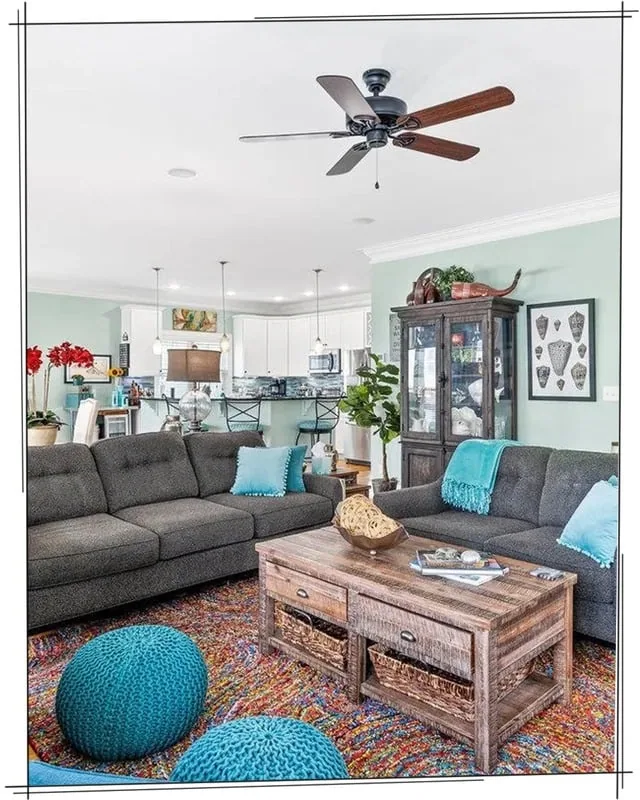
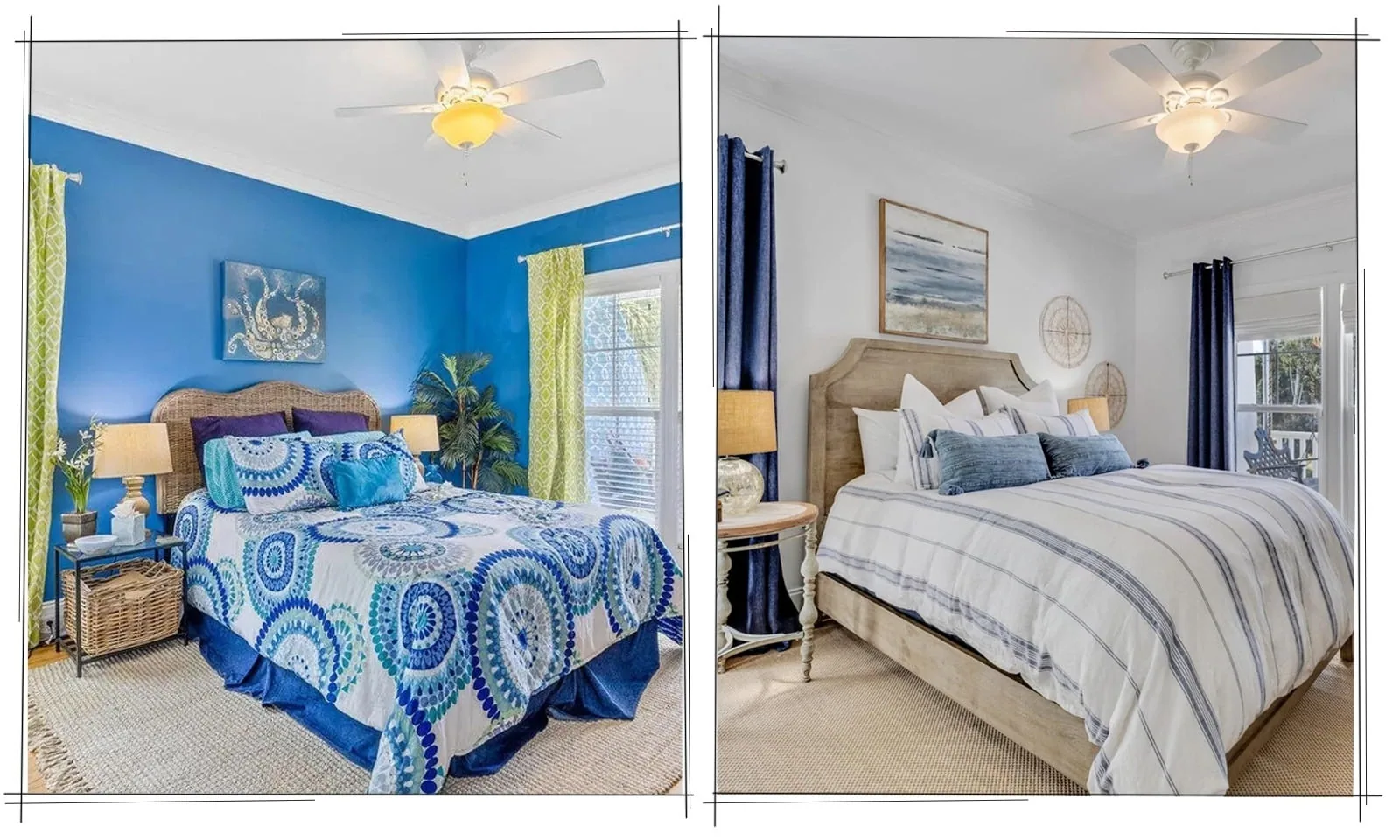
The first thing I did that made the biggest difference? Paint. The rooms had been painted through a decade’s worth of someone's changing moods. Seafoam, cobalt, and lavender. A different sea in every doorway.
I took all of it to one soft white tone and built the accompanying palette around calm tones: white, sand, navy, and natural wood. The rooms stopped competing. For the first time the house felt harmonious.
Next came the floors, sooner than I had planned, thanks to the smell. The carpet went to the curb, and the honey oak to a dark matte finish, a choice that pulled the place out of the nineties. None of it was cheap, but it was fast, and nothing else moved the needle like it.
By the end, the house smelled like salt and fresh paint.
The Softest Place in the Room
Then came the furniture. The bulk of the budget went to the pieces we live on. The sectional was the biggest thing I bought, because it’s where the good nights happen: movie nights, game nights, and everything in between. It’s the couch where all eight of us ended up that birthday weekend. It has to hold a full house and still be the softest place in the room.
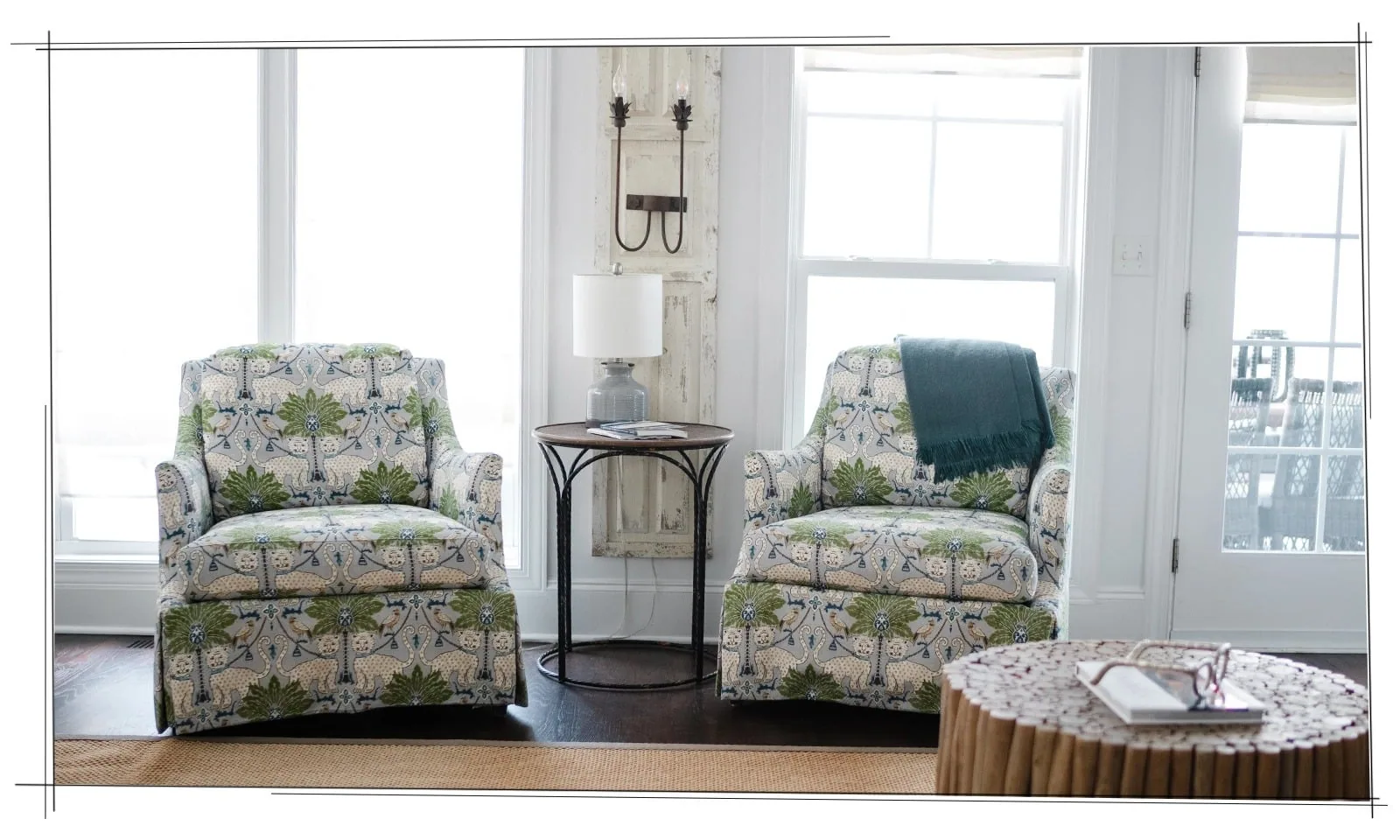
The lounge chairs beside it made me do a double take when I first saw them and spoke to my heart in a way some just couldn’t understand. A palm print that brought an unexpected energy to the space; their fabric is the first thing anyone sees and the reason the room feels like the coast and nowhere else. These pieces get loved the hardest. Wear on them isn’t damage. It’s the record of every good night we’ve had in this house, and it’s where a budget should go.
Character for Sixteen Dollars
Almost everything that gives the house its personality, I found for a bargain. It’s also what I had the most fun doing. The rugs are natural-fiber sisal that look far more expensive than they were. They forgive the sand, and only cost a few hundred dollars whereas a designer rug can run thousands. I kept the original lighting, swapping only the main fixture.
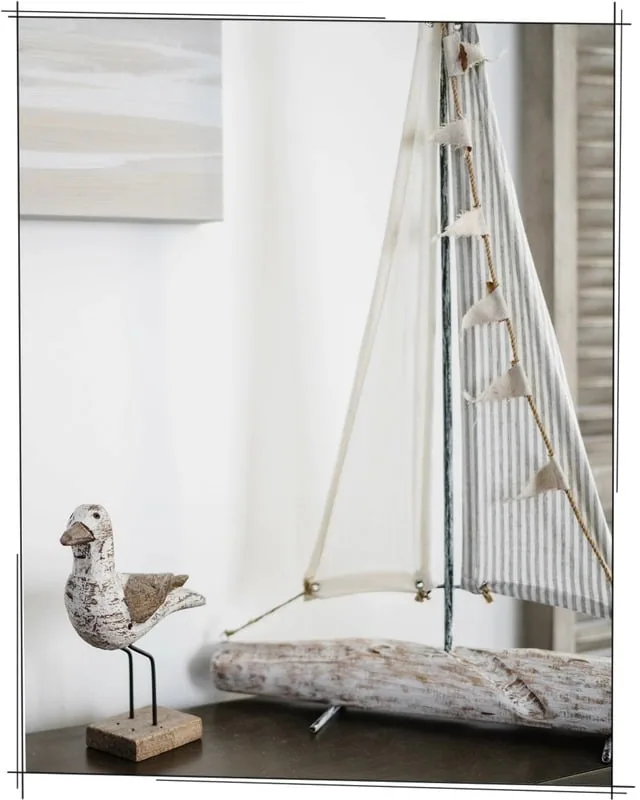
Funny enough, the character pieces every visitor remembers came almost entirely from HomeGoods and TJ Maxx. A carved seagull for sixteen dollars, a print of sandpipers at the tide line for twenty-three, driftwood sailboats along the console, baskets stacked where the throws live. Altogether it came in well under what I had budgeted for, which is what freed up the extra splurge money for the sectional and two printed chairs. Comfort from the few expensive things and character from inexpensive ones are what really brought the space together into a true home.
Even though I went in with this framework, I didn’t execute it perfectly. There was one purchase that broke every rule I had. A console in the front hall that cost nearly three thousand dollars. I was the only one who ever noticed it and I bought it not to marvel at or set things on, but just because I thought it was beautiful. Later, an image search turned up a nearly identical one at Pottery Barn for a third of the price.
Mine is the nicer piece, or so I like to tell myself…
What It Gave Me
To this day, I can tell you exactly why I made each decision in this house when it came to budget. What I can’t put a number on is the way it feels when you walk into it. That relief, peace, and happiness that fills your body when you relax and share it with others. Tackling it was a labor of love, and the creative outlet I needed after a career spent in spreadsheets.
There are mornings I’m in my home alone, before the rest of the little beach town wakes up, and those are the days I designed the house for as much as the loud, family-filled ones. Coffee on the front porch, the sunlight spilling through the palmetto trees, and the smell of the ocean reminding me of my childhood on the beaches in Cape Cod. I don’t know a better feeling, and it only gets better when my husband and son wander out to join me. No phones, no agenda, nothing to do but be together in a house we all love.
I still know exactly what I paid for this house. It just took me a while to understand what it was worth.
This is how I decided what was worth the splurge, what to skip, and what to steal the look on for a fraction of the price. It also shows you how to turn a Pinterest board full of pretty pictures into an actual shopping list. Download it free with your subscription. Not a subscriber yet? This is your reason to join.