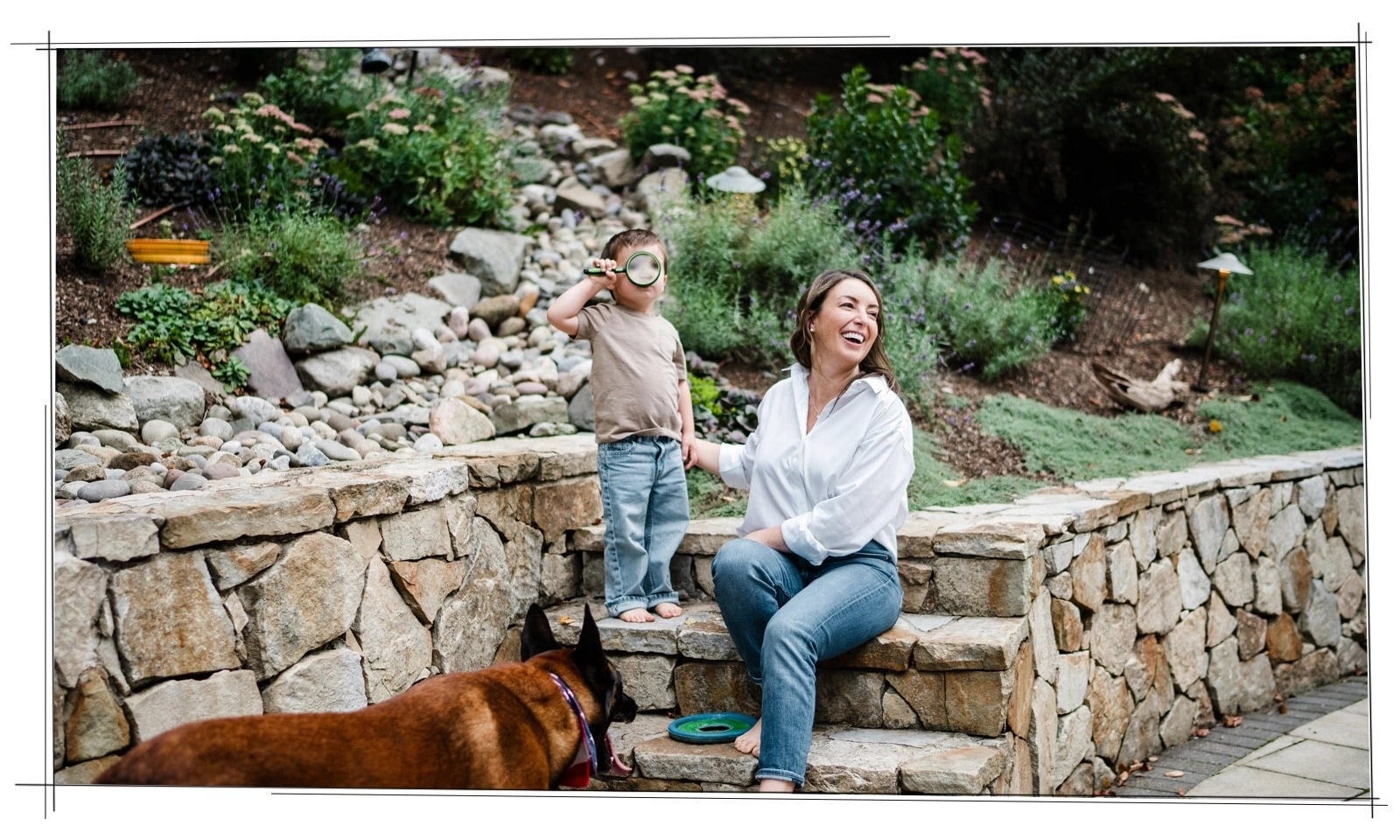
The best problem I ever had was the bare, wet hillside behind my house. I turned it into the best part of the property.
My whole job is making problems disappear. I find the one buried in the deal, the number three lines down that no one else caught, and I make it go away. The hill behind my house should have been easy to fix. It was a bare, brown slope, and every time it rained it sent the water straight down to the foundation. The fix could have been a single day of work: one pipe and a trench buried underground to steer the drainage somewhere else. But I looked at that ugly hill and saw more than something to fix.
I saw a chance to build the best thing on the property.
Here’s the smartest move I made, and it’s the same one I’d make in any deal. First, I didn’t pretend to know something. I know how to run companies and win negotiations. I don’t know how to plant a hillside so it thrives through a growing season. So I hired a landscape architecture firm, and together we turned a drainage problem into a design. I confess, it was more fun than any renovation has a right to be.
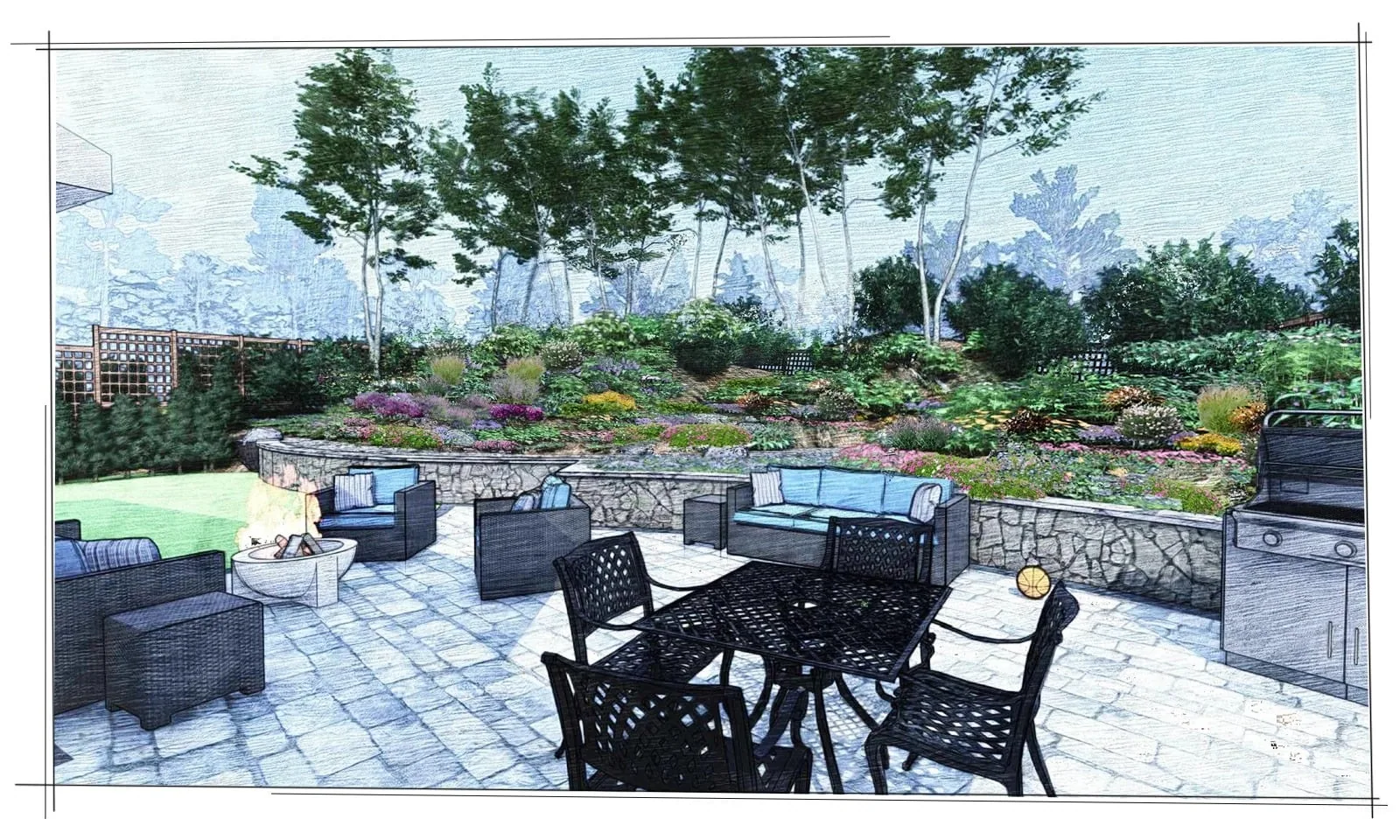
When we started, I thought I had the whole thing figured out. I built Pinterest boards full of color. I could see it: the patio furniture, a glass of wine with my husband at the end of the day, the hill rising in all its green glory right in front of us. Dinner on the grill, garden dining table outside, the birds singing in the trees. I had it all in my head, right down to the cushions.
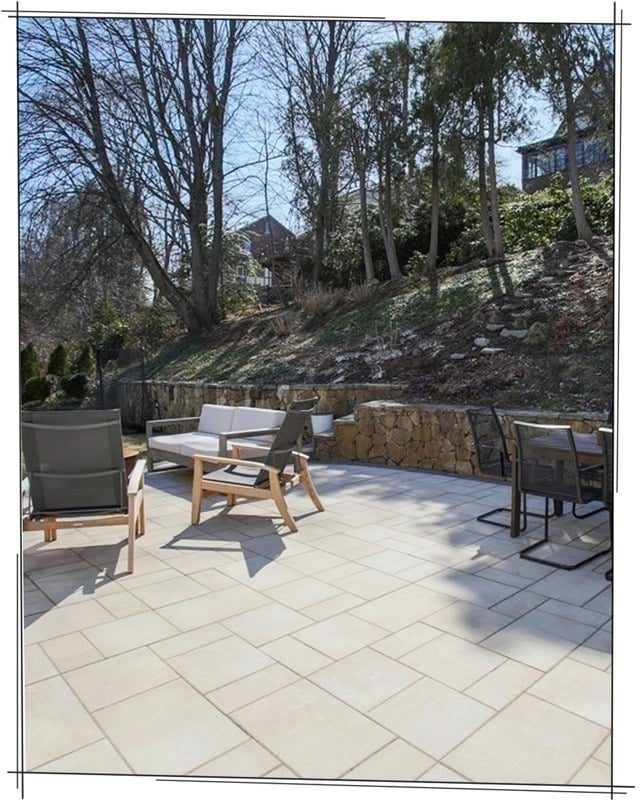
What I didn’t have was a clue. One side of the hill was shaded all year under the trees while the other side gets full sun all day. The water drainage issue meant a dry riverbed would cut right through the middle of my pretty picture.
All together it meant I was never going to have one seamless garden. I would have two, a shade garden on the left and a sun garden on the right, and the trick was making them feel like one. We had to know how each plant behaves across the seasons, and which ones drink the most, so the thirstiest ones could sit closest to the water.
I was out of my depth, and the few weeks we spent measuring, drawing, and mapping every plant were some of the best money I’ve ever spent.
The Centerpiece of My Garden
The dry river became the centerpiece, a bed of stone that looks like something a mountain stream left behind. It’s the most beautiful thing in the yard, it’s also, precisely, the drain. When a storm comes, it gathers the water off the hill and carries it away from the house, and lets it soak slowly into the ground. The problem solved, in plain sight.
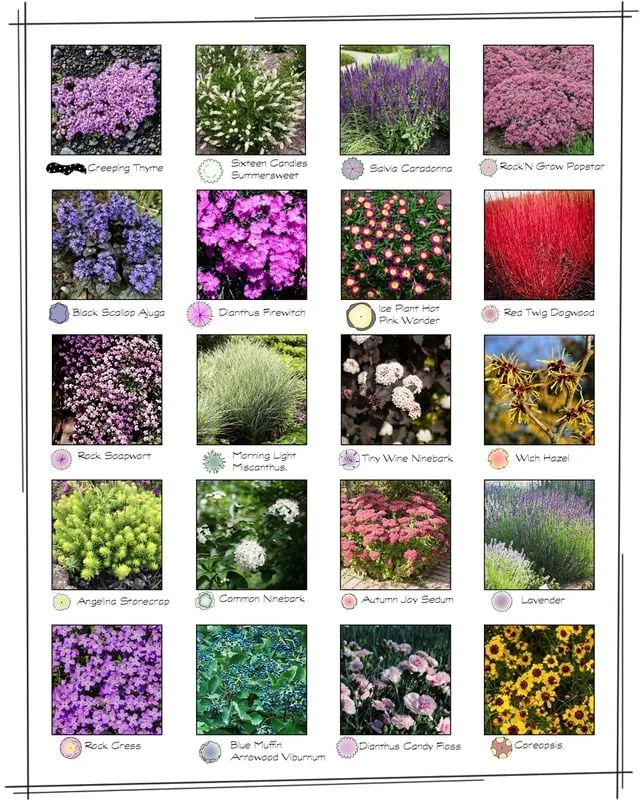
With the riverbed settled, we moved on to the part I’d been waiting for. The plants. My Pinterest board colors, finally going into the plan. But even here, the sun called the shots. The bright right side got the tough, sun-loving things: grasses, lavender, salvia. The shaded left got the woodland plants: ferns, astilbe, hydrangea. A ribbon of pinks and purples ran across both sides to tie the two halves together, with just enough yellow thrown in to give it some attitude.
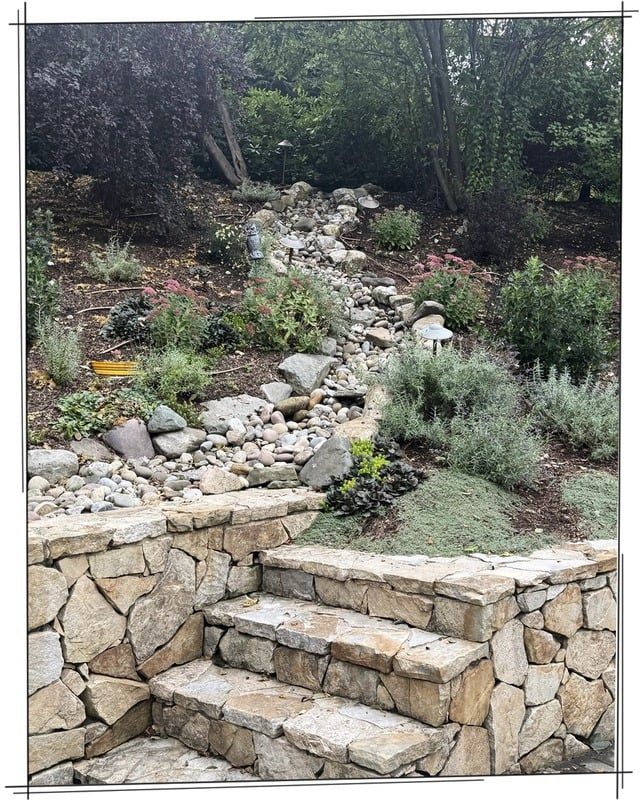
The designer kept me honest about the rest. Every plant had to earn its place by thriving on its own. No coddling, no constant care.
The one thing I knew for certain going in was this: I wasn’t going to build something beautiful that I couldn’t keep alive.
In the end I loved it. The ugly hill became everything I’d wanted, which was never really a garden. It was a place to come home to. In the early years it was just my husband and me, cooking outside and talking for hours with the two dogs at our feet.
A couple of years later there was a toddler tearing across the grass after a ball and parking his scooter in the middle of everything. The hillside framed it all and was worth every dollar.
No matter how much I loved the place, I was still me, and the details mattered. I knew exactly what to pay for and where the value was hiding. Meaning there was no way I’d ever sign whatever contract was slid across the table just to keep the moment moving.
FIVE THINGS TO PUT IN WRITING
A landscaping contract is still a contract. Treat it like one.
1. Payment in Stages.
A deposit, then payments tied to milestones as the work gets done. Never pay the whole sum up front, and hold the final check until the job is right.
2. The Plant Guarantee, In Writing.
Does it replace the plant, or only the labor to put a new one in? The two read identically right up until the first dry August.
3. Allowances, Pinned Down.
An allowance is a placeholder price for things like plants or stone that haven’t been chosen yet, and it’s where overruns love to hide. Lock in the real selections and the real numbers before you sign.
4. The Invisible Work, Specified.
Be clear on the work you won’t see once it’s done, like the soil amendment, gravel base, and drainage fabric under the stone. A cheap bid cuts these first. It’s also how you compare three bids side by side: the cheapest one is usually cheap because it skipped this part.
5. A Lien Waiver With Every Payment.
Here’s the part that surprises people; if your contractor doesn’t pay their crew, that worker can come after your house, even though you paid in full. The waivers are the receipts that close that door. Don’t release the final check until you have them all from the general contractor and from each subcontractor and supplier.
How to Get the Most for Your Money
I ran every one of these decisions through the same three questions I ask of any job. Do I enjoy it? Am I any good at it? And is this really the best use of my time when I could be spending on my business or with my family? If the honest answer is no on all three, I hire it out without a second thought. If it is yes, I keep it.
Worth Every Dollar
The Design
Start here, and don’t flinch at the number. A real plan runs a few thousand dollars, and on a project like mine, with water to move, it can reach the low five figures. That’s an investment, not a cost. It’s the best money spent on the entire job. Think of it as insurance against doing everything twice.
The expensive mistake is never the design fee. It’s the wrong plant in the wrong light, torn out a year later and replanted.
Find truly talented people for this part, the ones whose own gardens you’d want to have, then pay them for what can’t be faked: deep plant knowledge, a real read on your soil and light, and the eye to make it all hang together. A designer brings their eye; a landscape architect stamps the plan and pulls the permits. Here’s the part people forget: the plan is yours the moment you pay for it, which means you can take it and hire the build out to whoever does it best.
The Dry Riverbed
The one thing I’d never cut corners on. It’s the showpiece of the hill and the barrier keeping water off my foundation. If the grade or the base depth is wrong, the water comes right back towards the house. Hire a professional and don’t take the lowest bid. Hire someone who’s built several of these before and who has the portfolio and references to prove it.
Where to Save
The Plants
This is where the real savings are. The markup is steep, often double what the plant costs wholesale. Buy and plant them yourself and you keep most of that money, though in some cases you might give up the one-year guarantee that the markup is paying for. I wouldn’t do it myself because for me planting this much is slow work that fails all three of my questions. However, for some who find gardening pleasurable it can be well worth it. Whatever you decide, a good nursery guarantees its own stock, and watering hard that first summer prevents most of the losses the warranty is there to cover anyway.
Buy Small, and Fewer
A one-gallon plant costs a fraction of a three-gallon and catches up within a season or two. Perennials and grasses can be divided, so one plant becomes three by the second year. The beginner’s mistake is planting for how it looks the day it goes in the ground.
Buy for the garden you’ll have in three years, not the photo you want in three weeks.
The Moves No One Tells You
Unbundle the Design From the Build
This is the one that saves the most, and almost nobody does it. Pay for the plan so you own it outright. Then hand those plans to three contractors and let them bid it against each other. Design-build firms bundle the plans and build together on purpose, because their biggest profit is made in the installation. When you own the plans you own the leverage. This way you get three competitive prices for the same work, instead of one bundled number with nothing to compare it to.
Hire in the Off-Season
Everyone calls in the spring, which means fully booked crews and premium pricing. Call when their calendars are empty, usually late fall. The rates are lower and the plants are on sale too.
Soon after the hill was completed, I stood at the window with a glass of wine and watched as the first real storm hit it. The water came pouring onto the hill, where it found the stone and ran directly where we’d sent it. The basement stayed dry. The problem was solved. What I hadn’t expected was that what was once the ugliest corner of the property had become the one I couldn’t stop looking at.
This is the cheat sheet I wish I’d had before I started: the full plant list, which side each one went on, and how I matched the colors so two gardens read as one. Download it free with your subscription.
Not a subscriber yet? This is your reason to join.